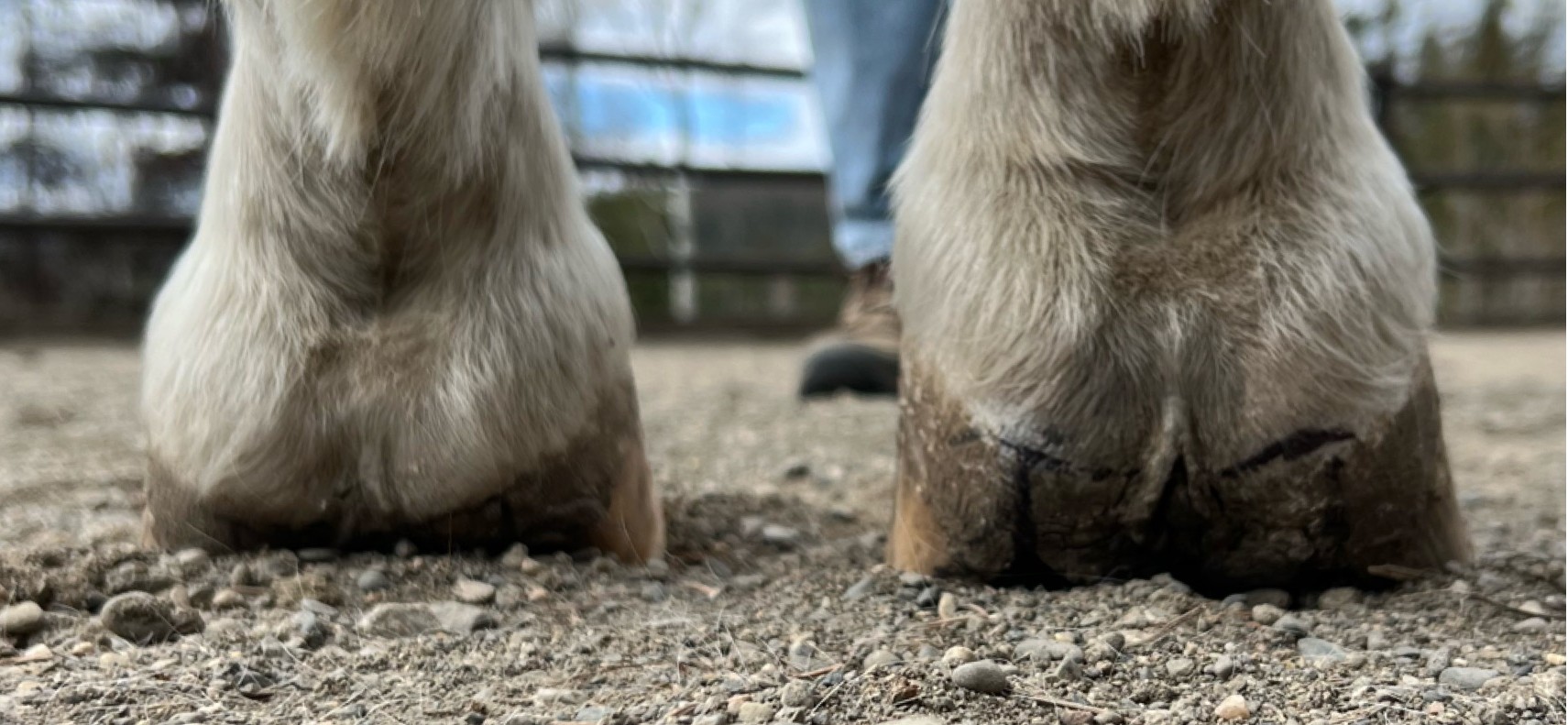
Heel Height Should Support the Horse, Not a Formula
Jun 08, 2026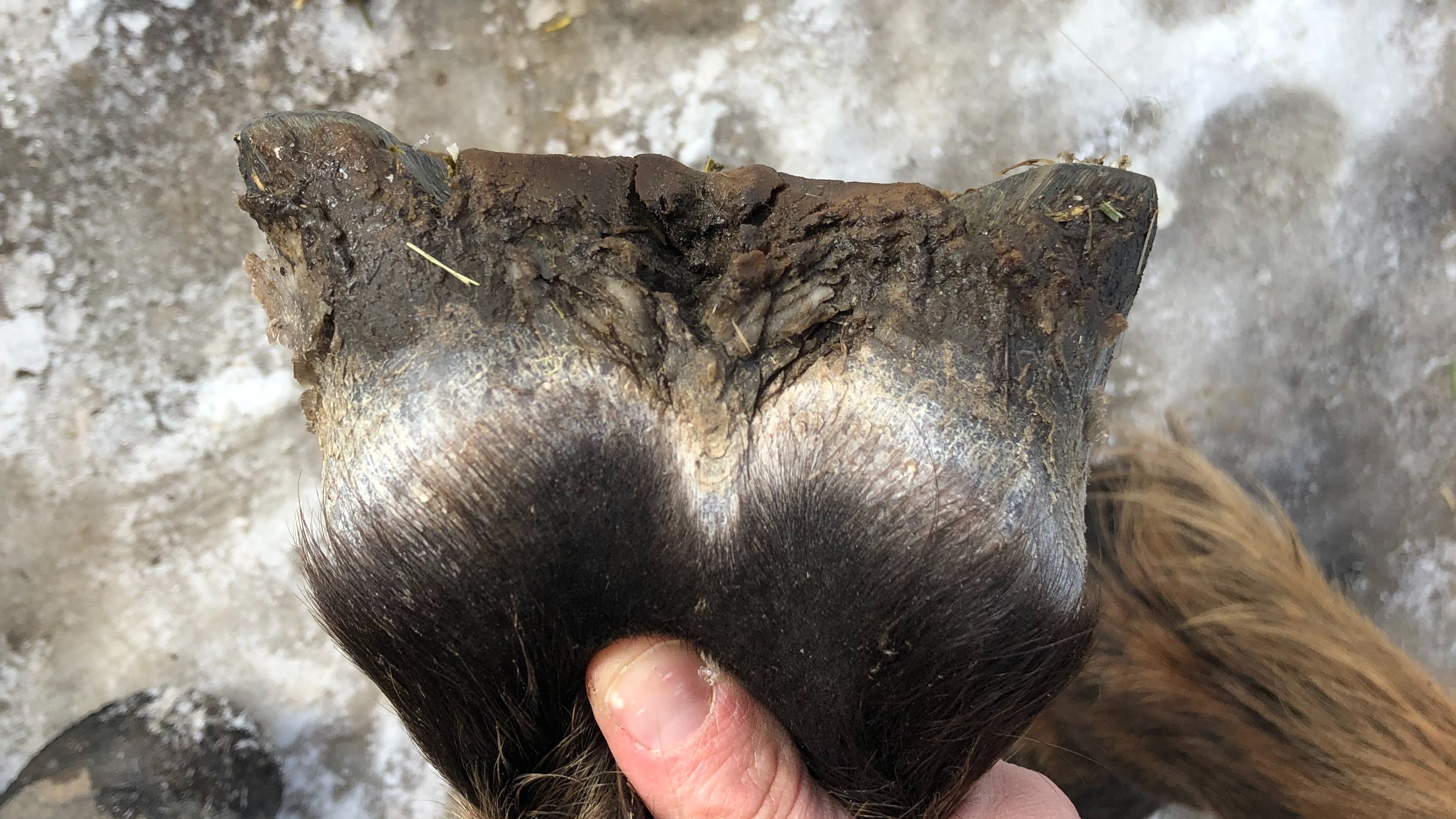
One of the most oversimplified conversations online is heel height.
People often want a universal answer for how much heel should be trimmed, but heel height should never be assessed separately from the horse itself. Posture, movement, landing pattern, compensation, hoof capsule distortion, pathology, caudal support, and coffin bone orientation all influence trim decisions.
Sometimes what people interpret as “high heels” are actually a horse trying to protect itself.
For example, if I have a horse with a very thrushy frog, weak caudal hoof structures, or a digital cushion that feels small, compressed, or underdeveloped, I may intentionally leave a bit of additional heel height temporarily to help protect the back of the foot and allow the horse to soften impact more comfortably as they begin landing heel first.
Heel first landings are extremely important, and if they are not present then things become more complicated. In some of these cases we may need to add support in the form of a composite shoe and/or packing.
Similarly, if I have a hoof that is extremely low with very little concavity, I may leave additional heel height temporarily to help create some artificial concavity and reduce solar pressure while we work on improving internal support and growing in a healthier, better connected hoof wall.
Over time, connected hoof wall restores elevation to the coffin bone, which allows concavity to build and the sole to thicken.
There are also cases where the heels themselves may appear long, but are actually very underrun and collapsed forward. In those feet, despite the appearance of “too much heel,” there is often very little true vertical depth through the back of the foot.
In some of these cases, I may intentionally leave the heels high, ugly, and forward temporarily simply to preserve vertical height at the back of the foot and maintain a more positive orientation of the coffin bone to the ground surface.
Other times I will remove the bent over and run forward heels and replace that lost depth with a composite shoe and wedge. Removing the bent tubule reduces leverage on the new growth and helps allow the heels to begin growing in more vertically.
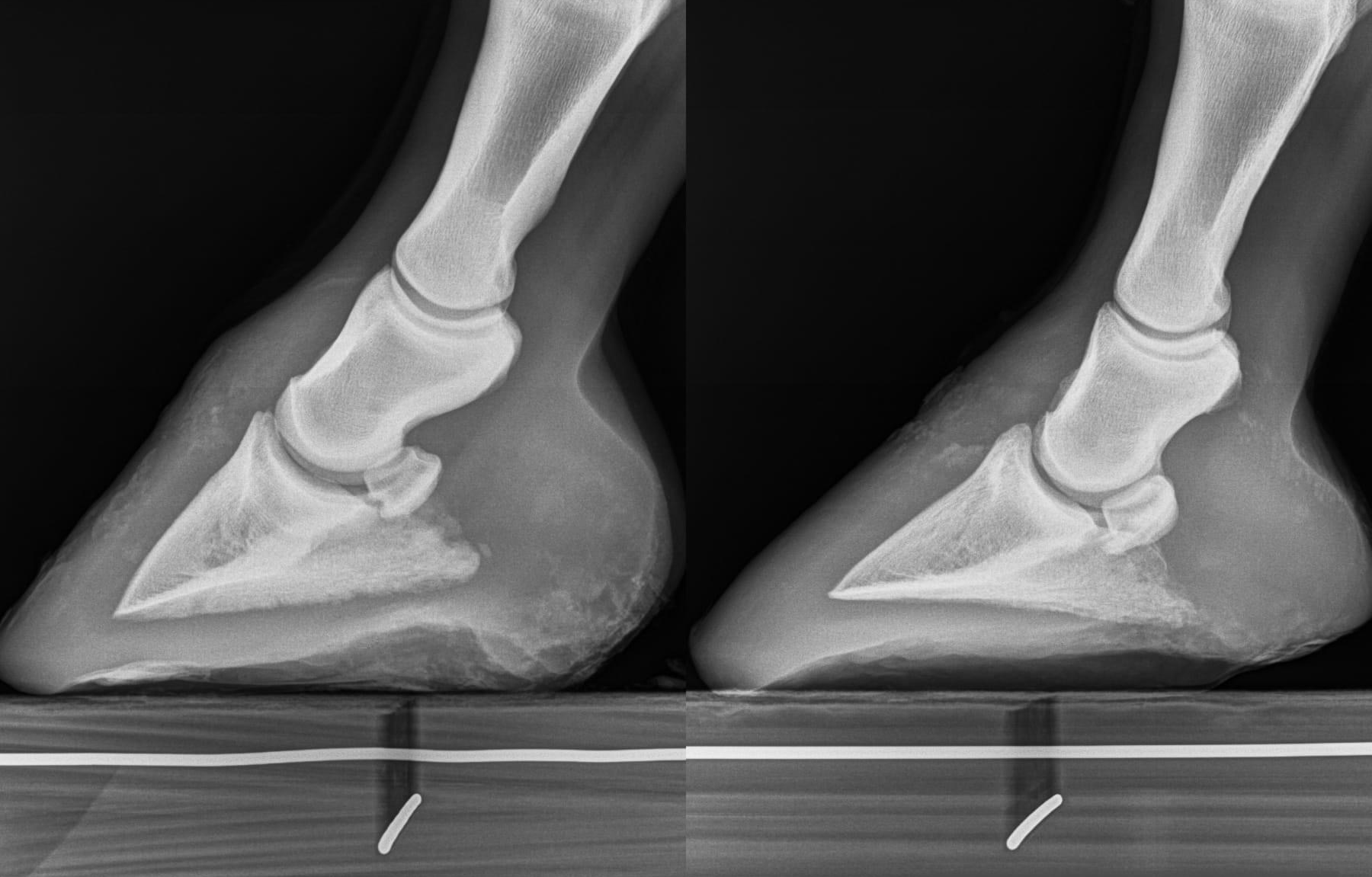
Heel height should always be evaluated in relation to the coffin bone orientation. Ideally, at peak impact of the stride, we want the coffin bone functioning parallel to the ground. That means at rest the coffin bone should sit slightly positive, around 3–5 degrees.
Lowering heels aggressively without regard for coffin bone position can contribute to negative palmar or plantar angles and create additional instability within the foot and the entire limb.
At the same time, leaving heels excessively high also creates problems.
Leaving heels too high can create excessive angle through the bottom surface of the coffin bone, increasing pressure on the tip of the coffin bone itself.
This becomes especially important in foundered horses where there is already compromise to the lamellar attachment and often rotation of the coffin bone itself. In these cases the rim edge and tip of the coffin bone may already be under significant stress, so balance becomes extremely important.
High heels can also reduce stimulation and loading of the frog and digital cushion, decreasing impact absorption through the back of the foot and potentially contributing to atrophy of those structures over time.
Old school trimming often advised lowering the heels to the widest part of the frog in order to stimulate the back of the foot and encourage growth. However, this is only beneficial if the back of the foot is healthy enough to absorb that pressure.
Over pressuring a weak caudal hoof can increase toe first landings and lead to serious damage.
These decisions are never one-size-fits-all.
What may be appropriate for one horse may be completely inappropriate for another.
Heel height should support the horse standing in front of you, not a formula.
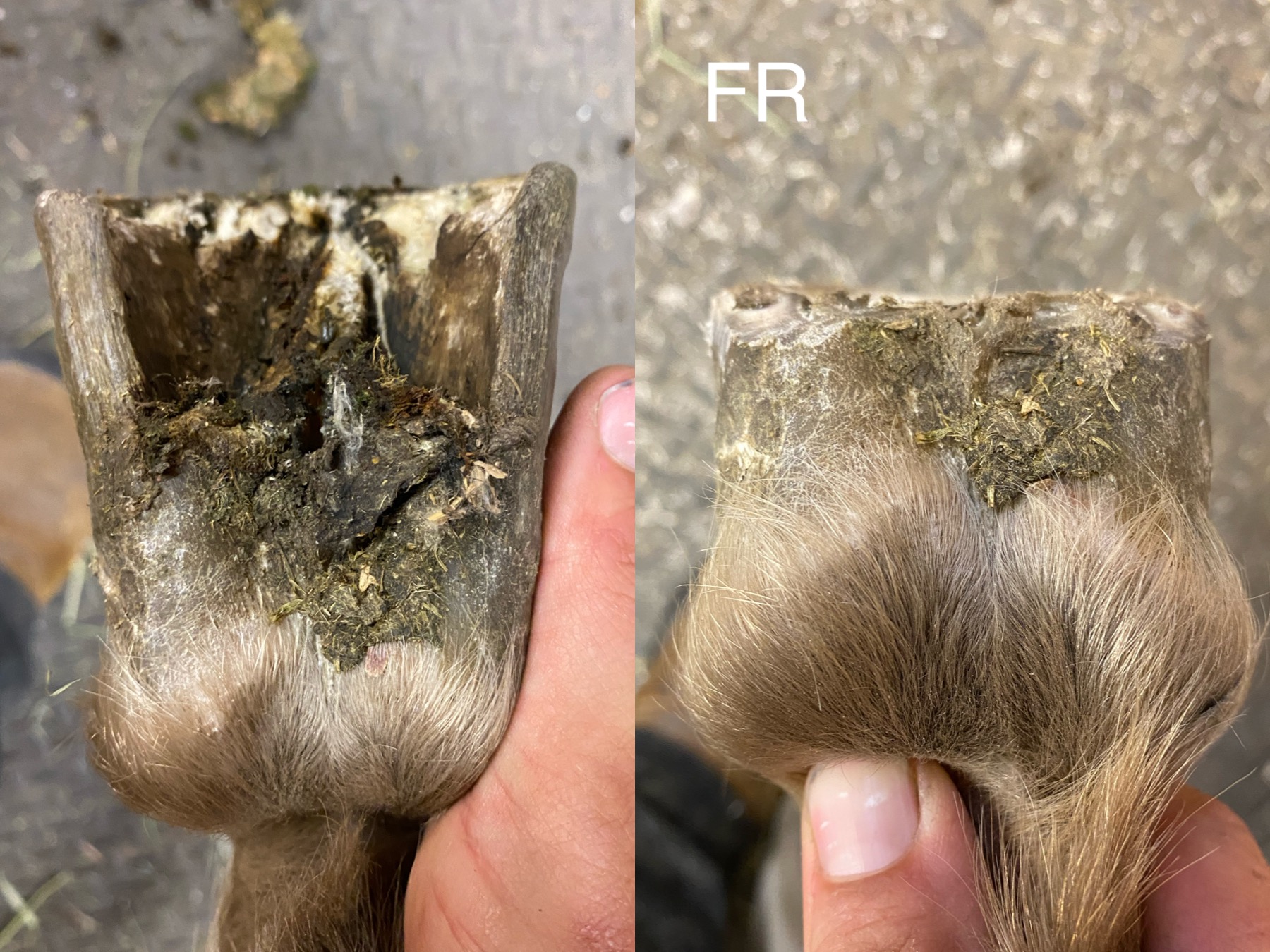
Above: How low can you go? Making changes to excessively tall heels needs to be done carefully, but also restores function to the back of the hoof. Flexion tests to make sure the horse has range of motion are extremely important.
Below: Heel height has a very direct effect on the ground surface angle of the coffin bone.
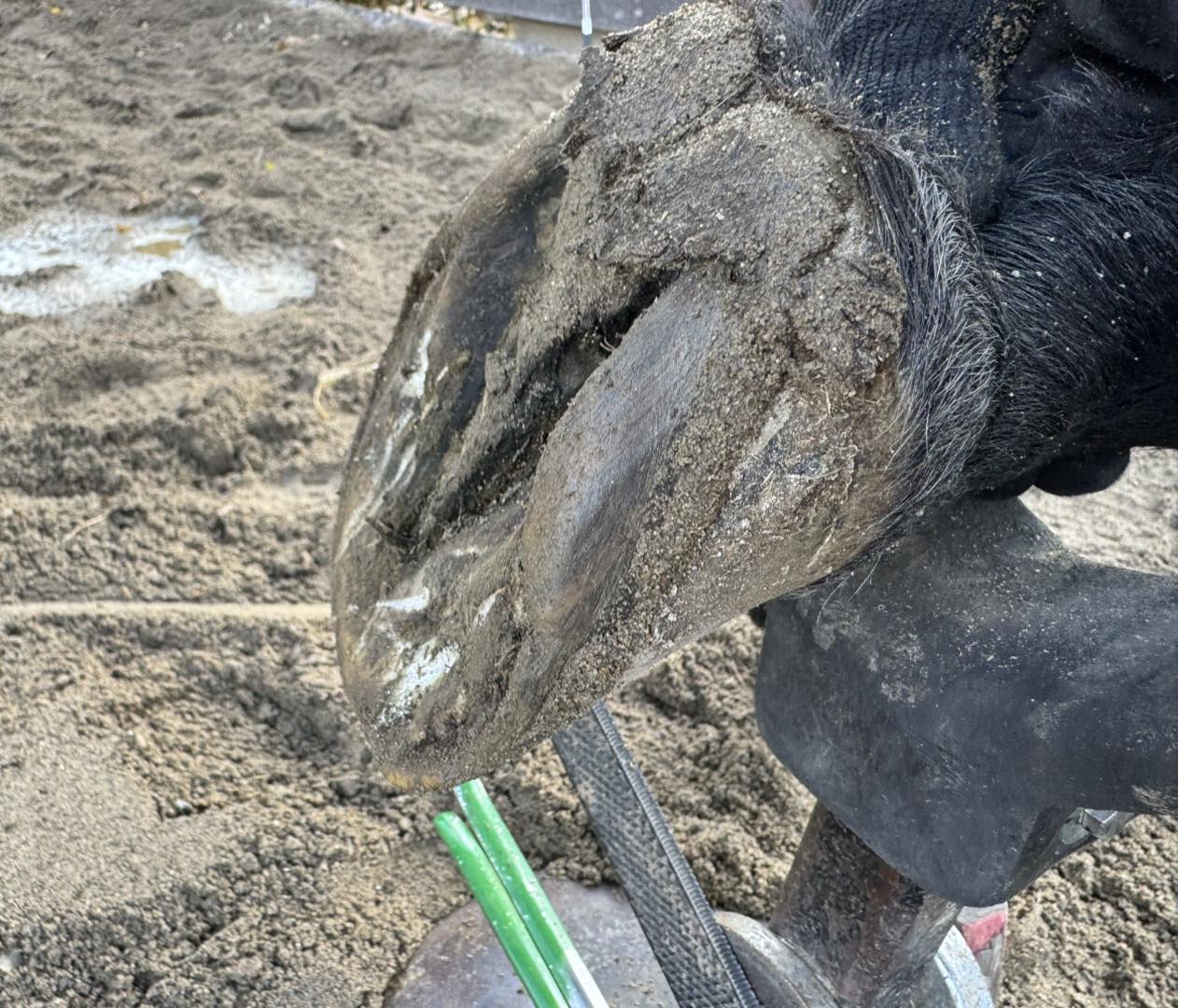
Above: Long run forward heels are ugly, but removing them also removes vertical depth.
Below: Balancing heel height is important for symmetry in posture and movement.